
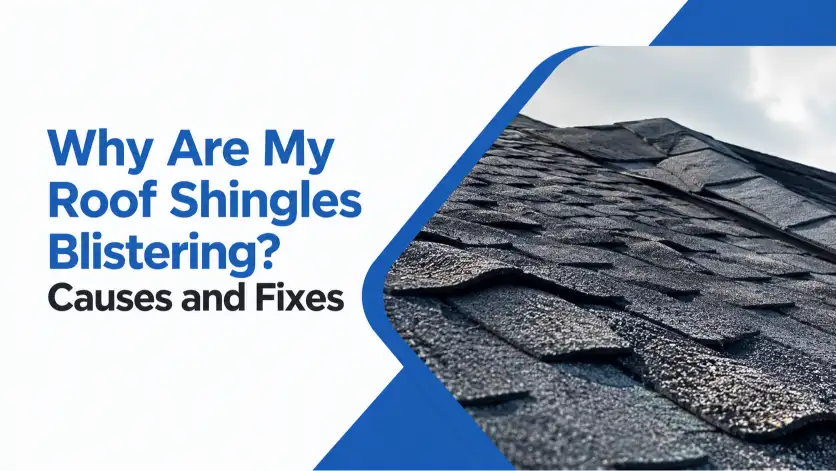
You were probably up there for something else. Cleaning out gutters, checking for storm damage, maybe just doing a walk around after a hot week. And then you saw them. Little raised bumps scattered across your shingles, some still intact, some already popped and rough-looking. Your first thought was probably hail. Your second thought was probably how much this is going to cost.
Take a breath. Bumps on a shingle roof don’t automatically mean disaster, and they’re not always hail either. What you’re likely looking at is blistering, and understanding its causes is the first step in knowing whether you need to worry or just keep an eye on it. That question, why are my roof shingles blistering, is usually the first thing homeowners search once they’ve spotted the bumps.
The Quick Answer: What’s Causing It?
Roof shingle blistering happens when trapped moisture or gas inside a shingle heats up and pushes the surface into a small bubble. Once that bubble pops, it takes the protective granules with it, leaving the asphalt underneath exposed to the sun.
Two things usually cause it. Either your attic isn’t venting heat properly, or there’s trapped moisture in the shingle itself due to how it was made or installed. In Houston, there’s a third factor working against you too. Our combination of intense heat and heavy humidity puts more stress on a roof than dry heat alone ever would. Most blistering starts as a cosmetic issue. Left alone long enough, though, it can shorten the life of your roof.
What Roof Shingle Blistering Actually Is
Think of a shingle as having a few layers stacked together. There’s the backing, a layer of asphalt, and then the granules on top that give your roof its color and protect everything underneath from the sun.
Blistering happens when something gets trapped between those layers, usually a small amount of moisture or gas, and it has nowhere to go. As the shingle heats up, whatever is trapped inside expands. The surface rises into a bubble because that’s the only direction it can push. Eventually, most of these bubbles pop, and when they do, the granules in that spot go with them.
What It Looks Like on Your Roof
You’ll usually spot it as small raised bumps, sometimes just a few millimeters across, sometimes bigger. Some will still be intact, smooth little bubbles you could press with a finger. Others will already be popped, leaving a rough, darker patch where the granules used to be. It tends to show up in groups rather than as one isolated spot, and you’ll often see it spread across a slope without any real pattern to where it lands.
Why It Usually Shows Up Early
Here’s something worth knowing. If blistering is going to happen because of a manufacturing issue or how the shingles were installed, it usually shows up within the first year or two of a new roof. If it’s showing up on an older roof instead, ventilation and heat are more likely the culprit, and that’s a problem that builds up slowly over years, not overnight. Either way, the fix usually starts in the same place. Someone needs to actually get up there and look.

What Causes Shingle Blistering in Houston Specifically
Two things create blistering on most roofs, and Houston adds a third that makes both worse.
Poor Attic Ventilation
Your attic is supposed to breathe. Cooler air comes in low through the soffit vents, warm air rises and escapes up near the ridge, and that constant movement keeps the underside of your roof from turning into an oven. When that airflow gets blocked, whether from insulation stuffed against the vents, a bird’s nest, or vents that were never sized right in the first place, heat has nowhere to go. It just sits there and builds. That trapped heat pushes up into the shingles from underneath, on top of whatever heat they’re already absorbing from the sun. The shingle ends up cooking from both sides.
Trapped Moisture From Manufacturing or Installation
Sometimes the problem starts before the shingle ever touches your roof. A small amount of moisture can get sealed into the layers during manufacturing, or it can get introduced during installation if shingles were laid down on a humid day. Either way, that moisture sits trapped until enough heat builds up to turn it into vapor. Once it starts expanding, the surface has to give somewhere, and that’s your blister.
This kind of blistering tends to show up faster, often within the first year of a new roof, and it’s usually more concentrated in one section rather than spread evenly.
Why Houston Heat and Humidity Make It Worse
A dry heat climate deals with one problem. We deal with two stacked on top of each other. Attic temperatures here regularly climb past 130 degrees in the summer, and our air rarely dries out enough overnight to give a roof any real recovery time. That constant cycle of heat and humidity means moisture has more chances to get trapped in the first place, and once it’s there, it has more heat available to expand it.
If your home has struggled with attic airflow before, or if you’ve dealt with musty smells or mold in the attic space, that same poor ventilation and Houston’s humidity combination is very likely part of what’s driving the blistering you’re seeing on the roof itself.
Roof Blistering vs Hail Damage: How to Tell the Difference
Homeowners mix these up constantly, and honestly, from the ground they can look similar. Once you know what to check, telling them apart takes about thirty seconds.
What Blistering Looks Like
Blisters pop outward. The damaged area rises up and out, and where it’s popped, you’ll see a rough, shallow patch with granules missing. There’s no real pattern to where blistering shows up. It scatters across a slope without caring which direction that slope faces, because heat and trapped moisture don’t care about wind direction the way a storm does.
What Hail Damage Looks Like
Hail does the opposite. It punches in, not out. You’re looking for small concave dents, almost like something pressed a thumb into the shingle. Hail damage also tends to follow a pattern tied to the storm itself. It shows up heavier on the side of the roof that faced the wind, and it often comes with other clues nearby, like dented gutters, dinged vent caps, or marks on your AC unit.
If you’re standing on a ladder trying to figure out which one you’re looking at, check the shape first. Bumps that push out mean blistering. Dents that press in mean hail. And if you’ve had a recent storm come through, it’s worth getting your roof checked either way, since the two can sometimes show up on the same roof at the same time.

Is Roof Shingle Blistering Serious?
A handful of small, unpopped blisters scattered here and there is usually just cosmetic. Your roof isn’t failing, and you don’t need to panic. Keep an eye on it, especially if summer is coming, since heat is what makes existing blisters more likely to pop.
Widespread blistering is a different conversation. If you’re seeing it across most of a slope, or if a good number of those blisters have already popped and left bare patches, that roof is aging faster than it should. Exposed asphalt without its granule layer takes a beating from UV rays, and that speeds up wear on the whole shingle, not just the blistered spot.
The honest answer is that you can’t fully judge severity from the ground. What looks like a handful of spots from your yard can turn out to be a much bigger patch once someone’s actually up there with eyes on it. That’s really the only way to know for sure whether you’re looking at a watch-it situation or one that needs attention now.
Can Blistering Shingles Cause a Leak?
Rarely. Shingles overlap in courses, so even a popped blister usually still has a layer underneath doing its job. One or two exposed spots don’t automatically mean water is getting in.
But that changes with volume. If blisters keep popping across a wide area, you’re stripping away the granule protection faster than the roof can handle. Bare asphalt breaks down under UV rays. Give it a year or two of that, and small cracks start forming right where the blistering happened. Cracks are what actually let water through, not the blister itself.

Is Roof Blistering Covered by Insurance?
Insurance is built to cover sudden, accidental damage. A tree branch through your roof, hail from last week’s storm, wind that ripped shingles off during a hurricane. Blistering doesn’t fit that mold cleanly. It builds up slowly from heat and moisture, and adjusters often file it under wear and tear, which most policies exclude.
That said, don’t assume you’re out of luck before you even ask. If your blistering shows up right after a specific storm, or if it’s tangled up with actual hail damage on the same roof, there’s a real case to be made that at least part of what you’re seeing is storm-related. The difference usually comes down to documentation. Photos, dates, and a clear inspection report matter more than most people realize when a claim gets reviewed. We help walk homeowners through exactly that when we document damage for an insurance claim, so nothing gets waved away.
What to Do If You Spot Blistering on Your Roof
Don’t grab a ladder and start poking at it yourself. Walking on shingles, especially ones already weakened by blistering, can pop more of them and make the problem worse before anyone’s even assessed it properly.
The better move is simple. Get someone up there who does this every day and can tell you in five minutes whether you’re looking at a handful of cosmetic bubbles or something that needs real attention. A good inspection covers more than just the blistered spots too. It checks your attic ventilation, looks for any related moisture issues, and gives you actual photos so you’re not just taking someone’s word for it. Not sure if what you’re looking at is a quick fix or something bigger? A free inspection settles it in one visit, and there’s no pressure to do anything you don’t need.
Get a Straight Answer About Your Roof
Those bumps on your roof aren’t going anywhere until someone deals with them, and now you know enough to at least understand what you’re looking at. Whether it’s a handful of harmless spots or something that needs real attention, guessing from the ground only gets you so far. Get a free inspection and find out exactly what’s going on up there. No pressure, no guessing, just a straight answer from someone who’s spent years looking at Houston roofs.